For nearly 25 years, IFTER has been developing dedicated solutions for security systems. Our flagship products include the IFTER EQU2 integration and visualization system and the EQU ACC access control system. These solutions are utilized in facilities that demand the highest quality and extensive configuration capabilities.
One such facility is the Marshal’s Office of the West Pomeranian Voivodeship, where our products were implemented to create an exceptionally advanced and efficient security environment.
Comprehensive System Integration
At this facility, IFTER solutions were comprehensively applied in both the integration, management, and visualization of security systems, as well as access control (ACS), which was extended to include time and attendance (T&A) features.
Despite the wide range of functionalities, system management remains simple and automated — all subsystems utilize a common database.
Visualization of Security Systems
The visualization and integration platform covers:
- Fire Alarm System (FAS),
- Access Control System (ACS),
- Intruder & Hold up Alarm Systems (I&HAS),
- Closed-Circuit Television (CCTV).
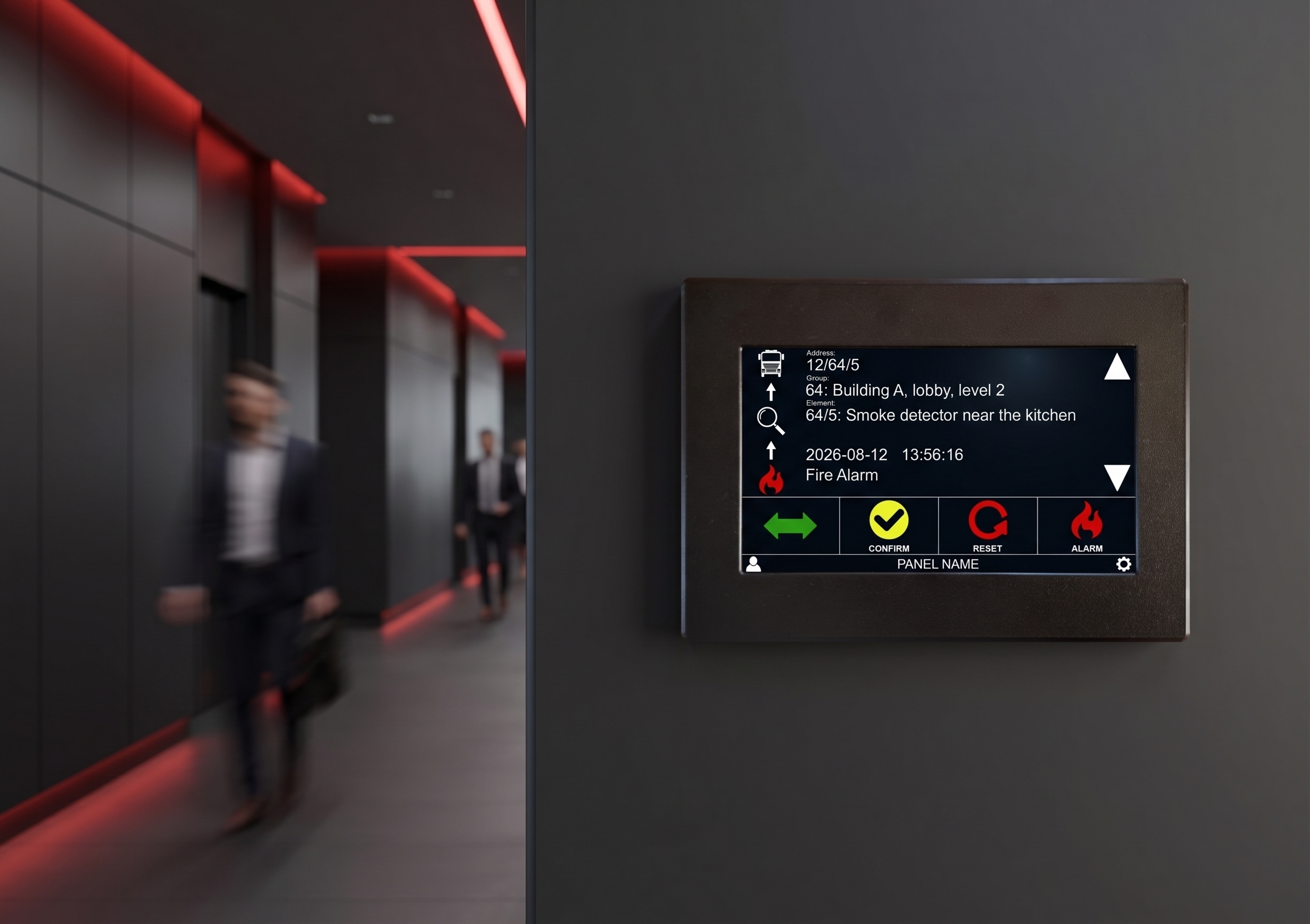
The visualization was designed to be intuitive, allowing for seamless transitions from general site plans to detailed floor views. In the event of a threat, such as a fire, the system automatically displays the exact location of the incident.
All integrated systems are presented on common architectural floor plans of the facility. This allows the operator to easily verify the alarm location by clicking a camera icon located near the activated sensor.
The camera feed is displayed automatically, along with an archive recording from 10 seconds prior to the alarm trigger.
Through built-in ACS support, the operator can also track the movement of individuals and perform visual verification. The system provides real-time data on the number of people present on each floor.
Despite supervising over 5,000 sensors and access points, the system’s operation remains remarkably intuitive.
The system can also be expanded to include monitoring of active backbone network devices and server room environmental parameters (power supply, temperature, humidity).
To ensure operational continuity, the system is monitored from two command centers supported by two integration servers.
Access Control
The building structure is typical for office facilities; therefore, the IFTER EQU ACC access control system covers over 800 access points. Each controller communicates with the supervisory system via an Ethernet network, which facilitates easy expansion – simply by adding a controller, readers, and sensors and connecting them to the nearest switch.
The controllers are installed in enclosures with a buffer power supply and battery, in accordance with the PN-EN-60839 standard, ensuring system operational continuity even during power outages. This architecture guarantees speed, reliability, and security.
The EQU ACC system allows for flexible adaptation of access rules to individual needs.
Examples include:
- Public entrance doors are automatically unlocked during office hours.
- Some offices operate in “first-card-in” mode (the first card swipe unlocks the door, the next one restores access control).
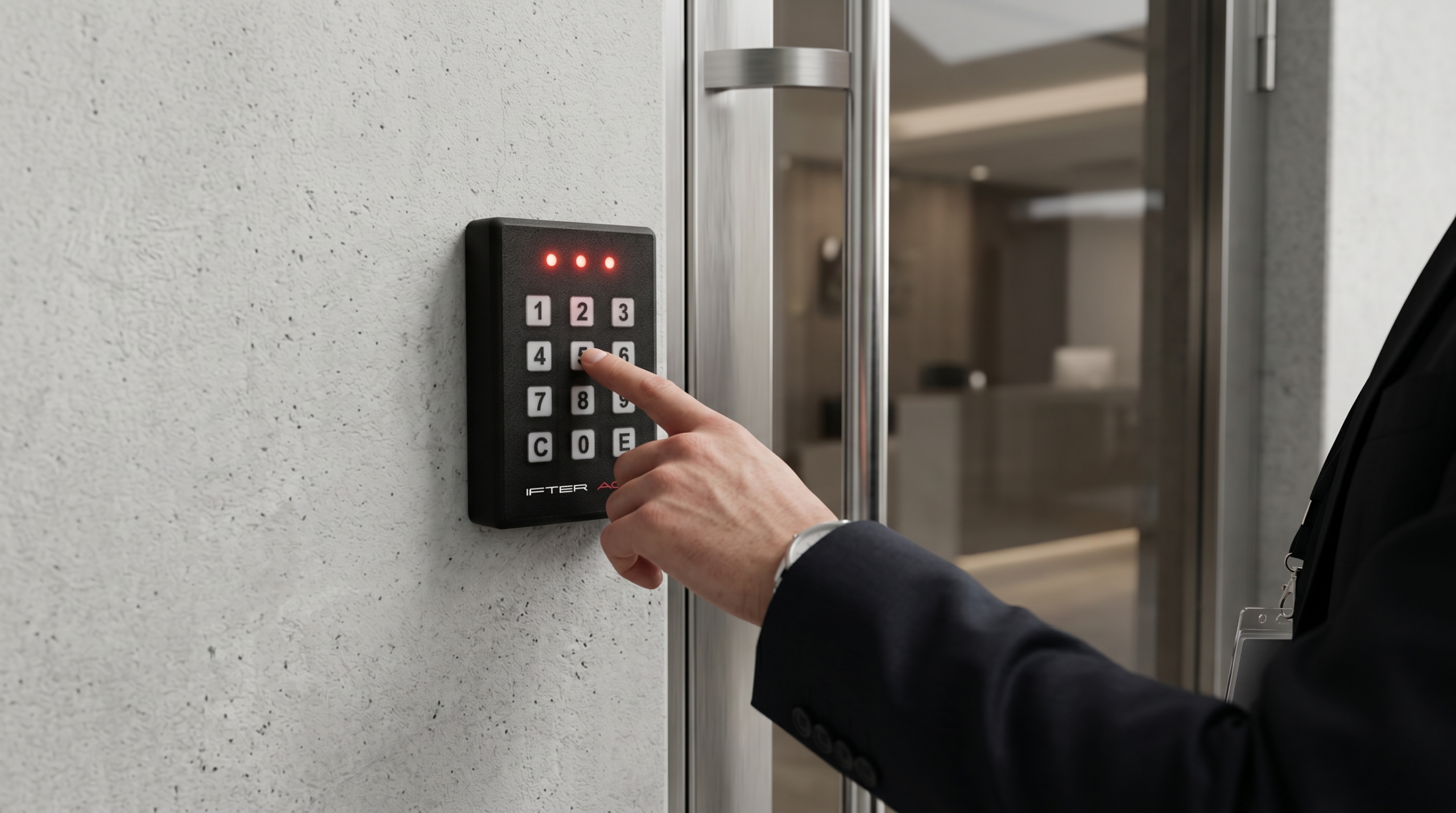
- High-security rooms require a card with a PIN or two-person authorization.
- Security personnel use function cards, enabling, for example, the rapid locking or unlocking of access points.
The system is equipped with a global anti-passback controller, which prevents entry into another building without first exiting the previous one.
Time and Attendance (T&A)
At numerous building entrances, touchscreen color terminals have been installed, allowing for the registration of work start and end times, business outings, and other user-defined events.
Thanks to the automated calculation of working time, the accounting department has gained a significant advantage in settling employee hours.
The T&A system also covers remote branches, ensuring consistent time tracking across the entire organization.
It enables the definition of work schedules, monitoring of absence limits, and automatic detection of missing data.
Numerous analytical reports and summaries allow for effective planning and work optimization.
ACS Management Software
The Windows-based application enables configuration and management of access control for up to 800 access points. Its key advantages include:
- Hardware grouping (controllers, access points) by floor, building, or location.
- Organizational groups (e.g., HR, IT, technical staff) with assigned rules and restrictions.
- Multi-card support – assigning multiple cards to a single person (various technologies: Unique, Mifare DESFire, UHF) without losing event history.
- Vehicle assignment – linking users to vehicles recognized automatically via license plate recognition (LPR) or UHF cards.
The system supports data import from files, synchronization with HR systems, and integration with LDAP directory services.
Efficiency is further enhanced by automatic card filtering based on validity, training certifications, or medical examinations.
The card personalization module automatically generates employee IDs by retrieving system data and capturing photos directly from a camera.
The system also allows for bulk access point control — for instance, during an evacuation, all emergency exits can be unlocked with a single button. At assembly points, security personnel scan participant cards using wireless readers, providing real-time monitoring of the number of people remaining in the building.
Web Application
The Web application provides convenient access to the system from any device. At the Marshal’s Office, it is used by 35 users, including departmental secretariats, to log business trips and generate attendance or tardiness reports.
From the Web application, users can:
- Add and manage employee data.
- Define associated readers.
- Restrict data access solely to authorized personnel (e.g., a secretary in Dept. 1 cannot view data from Dept. 2).
In other facilities, the Web application is also used for visitor pre-registration, featuring automatic QR code generation for site entry, as well as creating analytical reports and summaries. In the event of a server connection loss, data is presented in “frozen” mode to ensure operational continuity.
Summary
The comprehensive IFTER EQU2 solution, featuring the built-in EQU ACC access control, is among the most extensive and flexible security systems available on the market. Its greatest strengths are its intuitive operation, scalability, and the ability to be tailored to the individual needs of the user.