Security management in military complexes is one of the most demanding tasks in our industry. The system must operate reliably under all conditions, maintain continuity, and provide control over thousands of devices distributed across vast areas. Designed specifically for such applications, IFTER EQU2 Military is a PSIM-class system engineered for the integration and supervision of security infrastructure in high-requirement environments.
Structure and Requirements of the PSIM System
PSIM systems deployed in military complexes perform extensive tasks across two security levels:
- basic level – covering individual units.
- master level – covering the entire complex, supervised by the Global Surveilence Center (GLC) and the Backup Surveilance Center (BSC).
The supervisory system must ensure full integration with multiple security subsystems, including:
- Access Control System (ACS),
- Intruder and Hold Alarm System (I&HAS),
- Closed-Circuit Television (CCTV),
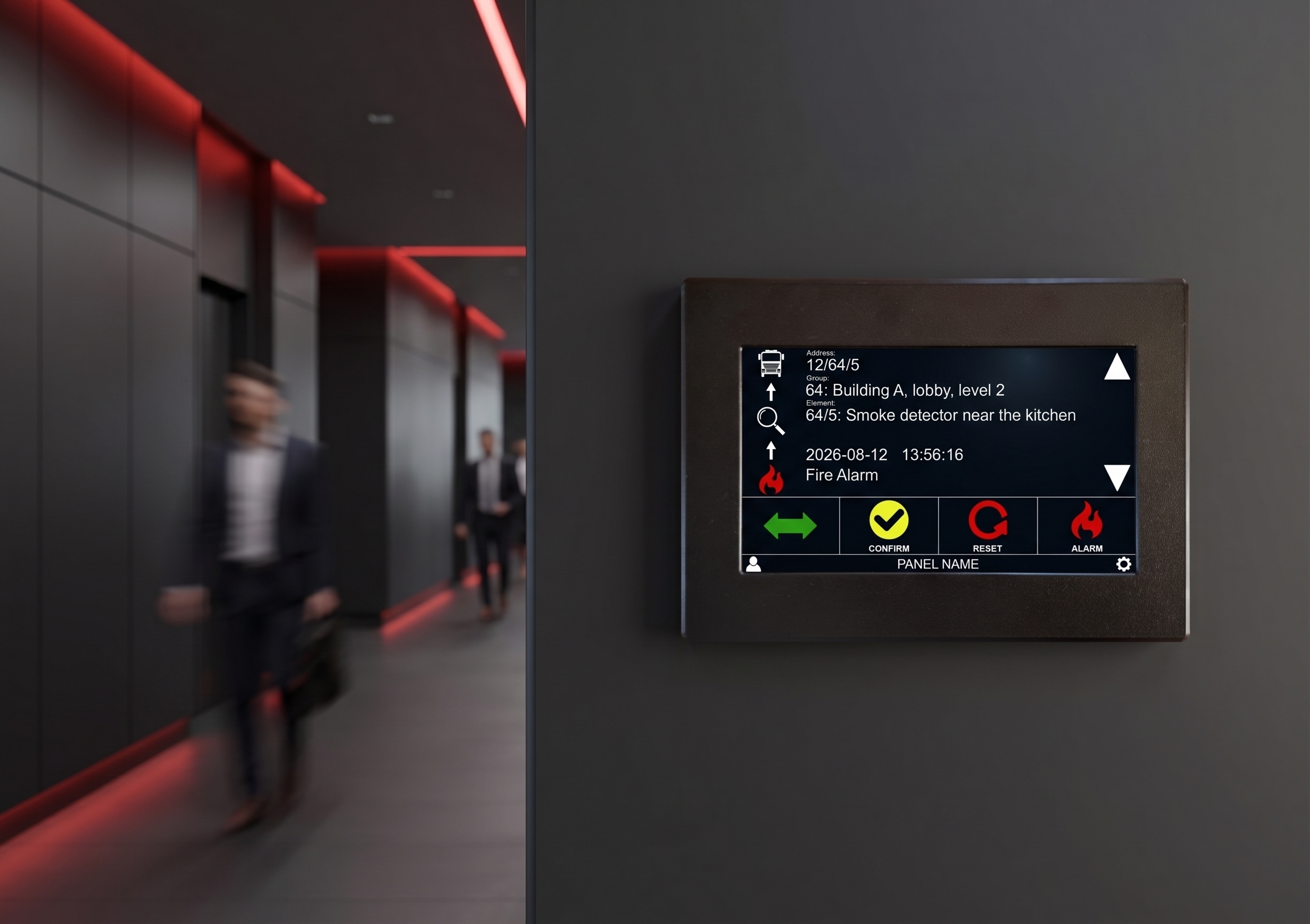
- Fire Alarm System (FAS),
- Perimeter Protection Systems,
- Data Transmission Paths.
All these systems must be visualized, managed, and interconnected. The visualization cannot be web-browser-based; it must be scalable, efficient, and fully customizable, allowing for any definition of icons, colors, and device states. This approach is essential when handling over 10,000 sensors, modules, readers, and cameras, maintaining smooth operation regardless of system size or service life.
Access Control System (ACS)
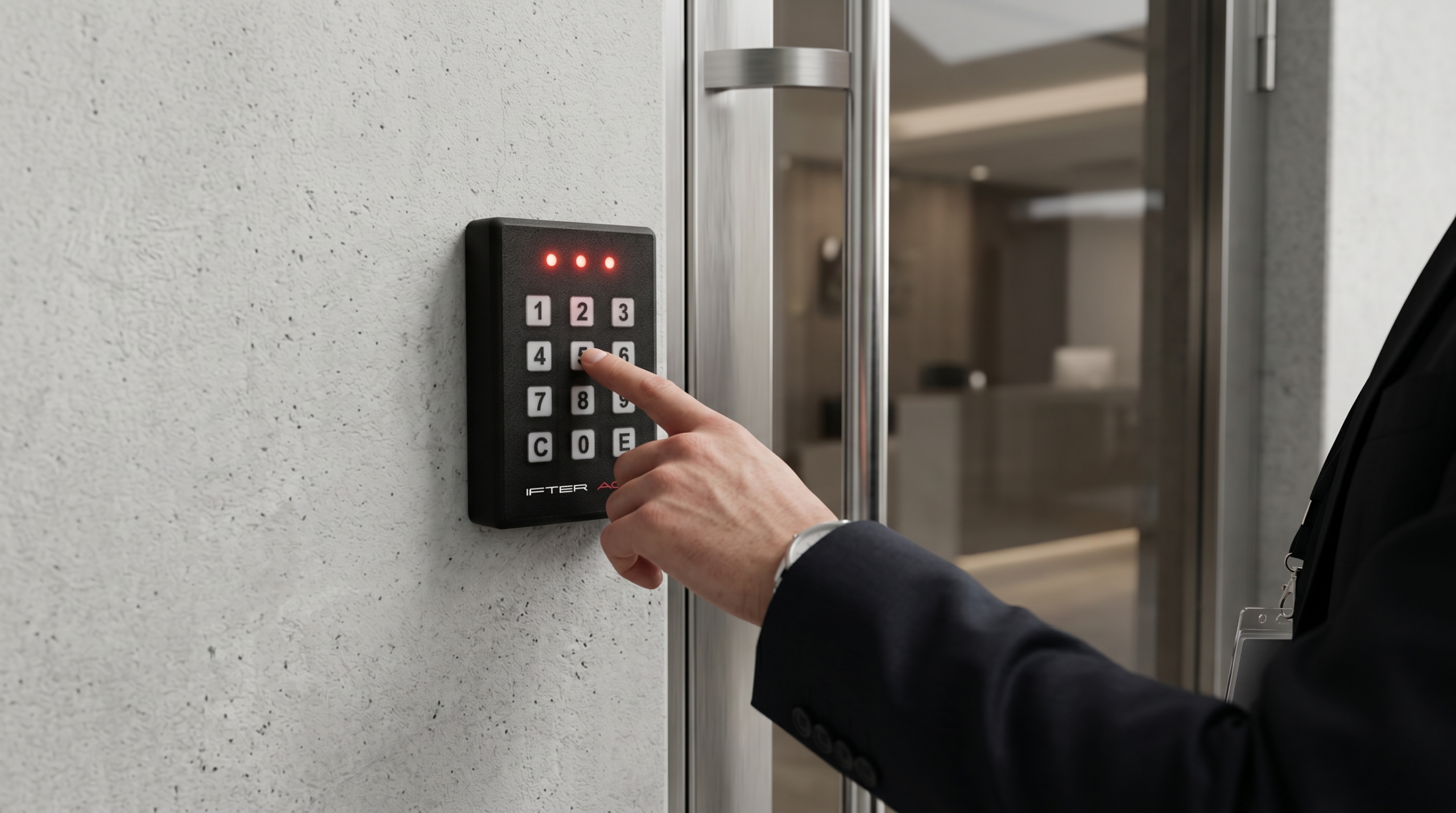
In terms of ACS, specific requirements apply: the system must comply with the PN–EN 60839-11 standard (at least Class 3), providing full transmission encryption at every stage. It must not be based on central panels but rather feature a distributed structure, where each controller stores the full configuration and a large event buffer. This allows for autonomous operation in case of connection loss with the master system. To meet these demands, IFTER developed a specialized product line dedicated to military clients, considering their unique needs. The core solution is IFTER EQU2 Military – a PSIM system equipped with cluster technology, which enhances reliability and stability through database decentralization.
Cluster Technology and Local Command Centers
Within a military complex, individual units have Local Surveilance Centers (LSC) – security management workstations dedicated solely to a given unit. Each LSC has its own SQL database and can operate independently if the connection to the GSC or BSC fails. Once communication is restored, the system automatically synchronizes data, transmitting all events and configuration changes. In normal mode, the LSC communicates in parallel with the MSC and BSC using packet encryption, ensuring a high level of transmission security. Consequently, losing connection to one center does not affect the operation of the other.
To handle alarm panels located in other buildings, RIIS modules are used. These are compact communication devices supporting up to two alarm panels (RS232 and Ethernet). RIIS modules feature low power consumption, a wide power supply range (10–60 VDC), resistance to high humidity (up to 95%), and a memory capacity of 100,000 events per panel. They can support up to four command centers simultaneously, providing full data encryption and surge protection.
LSC and BSC Command Centers
The LSC and BSC command centers hold the full configuration of the entire complex. They allow for security status monitoring, system control, and configuration changes. Each center operates based on two database servers and two integration servers. In the event of a server failure, the backup server automatically takes over, and the system self-synchronizes once operation is restored.
Security Mechanisms and Access Management
IFTER EQU2 Military features a flexible mechanism for managing access to events, graphics, and statuses. This allows for precise permission definitions and the implementation of security scenarios, such as the “silent duress” alarm – where an alarm is not visible at the workstation from which it was triggered but is displayed at others. The system also enables maintenance verification – if a sensor is not tested during service, the administrator is notified.
Integration and Inter-system Relations
Integration in IFTER EQU2 Military goes beyond shared visualization. The system allows for logical relations between different systems, such as access control and key management systems:
- an unregistered person at the entrance cannot collect a key,
- a person who has not returned a key cannot leave the facility.
It is also possible to combine data from IP camera analytics, perimeter systems, and alarm panels. This enables the creation of virtual security zones that analyze correlations between systems – e.g., if two systems confirm intruder detection, an alarm is generated. Each virtual zone can be armed, disarmed, or have its elements bypassed.
EQU ACC 400 Access Control System
For military facilities, the EQU ACC 400 line plays a critical role, meeting the PN-EN 60839-11 Class 4 standard, as confirmed by the TECHOM Qualification Certificate. The controllers support OSDP v2.2 readers with encrypted data transmission and monitor power supply status, batteries, temperature, and communication interruptions. The modules feature DIN-rail mounted electronics protection in enclosures meeting IP4x and IK04 standards with tamper sensors. Inputs are supervised and distinguish between: sabotage, short circuit, open circuit, opened, closed, and sensor anti-masking.
Controller specifications:
- Ethernet port surge protection (150A, 10/1000µs),
- RS485 interface protection (600W, 10/1000µs),
- operating temperature range: -10°C to +40°C,
- power supply: 10–28 VDC,
- energy consumption: approx. 1 W,
- memory capacity: 1 million cards and at least 500,000 events.
Each controller performs technical parameter diagnostics at intervals under 3 minutes and records a history (1000 entries) for values such as transmission quality, voltage, temperature, battery status, CPU load, and memory. This allows for early fault detection and precise diagnostics.
Additional Functionalities
The system offers, among others:
- Global anti-passback with flexible area definitions,
- visitor notification and badge management with support for ID cards, cameras, and printers,
- organization of users and controllers into organizational and hardware groups,
- extensive reporting and tracking of people and devices.
Summary
IFTER EQU2 Military is the result of many years of development and cooperation with military units. Thanks to its scalability, reliability, and adaptability to changing threats and investor requirements, it stands as one of the most advanced and flexible PSIM solutions available on the market.