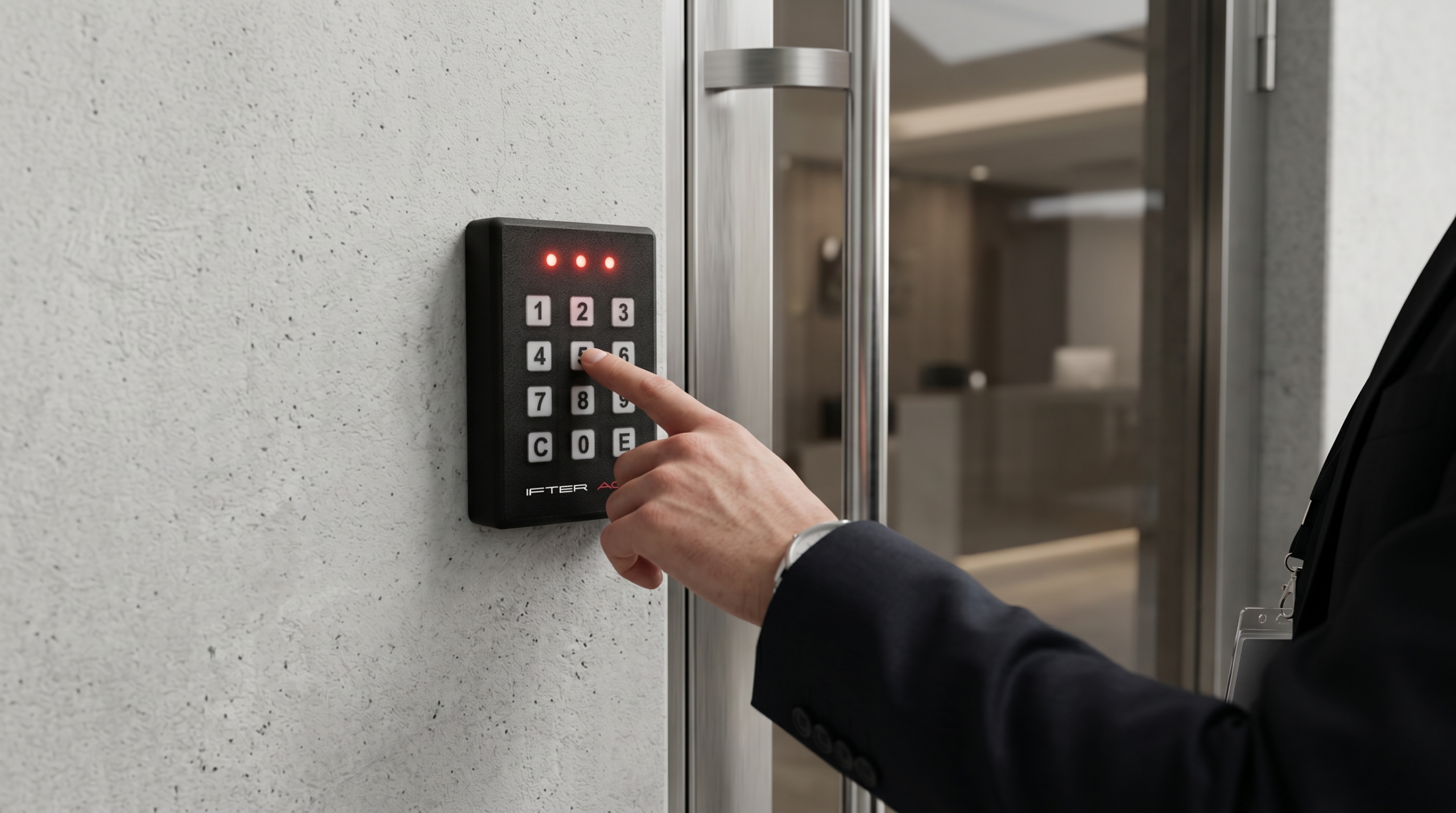
To ensure high facility protection effectiveness and proper team coordination, it is crucial to efficiently inform designated personnel and facilitate their tasks, even in situations of stress or fatigue. PSIM-class systems, which control the entire visualization and security management process, perform excellently in this regard. Unfortunately, the specifics of these solutions work primarily in local control centers where trained security personnel are permanently stationed.
The market has lacked an effective system dedicated to individuals who do not professionally handle security on a daily basis, yet are essential to raising the level of facility protection. This group includes nurses at medical facilities, department managers in factories, or soldiers at military installations. These individuals must actively participate in evacuation processes, so the information conveyed to them must be simple and unambiguous. In response to these needs, the Security Panel System (SPS) was created – a comprehensive solution that performs well in fire systems, intrusion systems, access control, and room reservation management.
Security Panel System Architecture
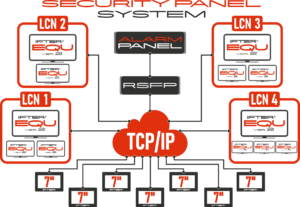
The SPS system is based on a server communicating with individual subsystems. The architecture capacity allows for handling up to 65,000 panels, and additionally the system can transmit information from devices to four independent local control centers. In line with current market trends, all communication is encrypted, and access to individual components is additionally secured.
The central executive element is a 7-inch touchscreen panel, developed by IFTER engineers and manufactured in-house. Independence from foreign suppliers in the Far East guarantees consistent quality and supply certainty for many years.
The panel construction has been optimized for reliability:
-
The device consists of only two parts: the main board and the touchscreen. Connections are made through special connectors or soldered, which significantly increases operational and transport reliability.
-
A conventional operating system has been eliminated. All software is fully proprietary, which significantly hinders any hacking attempts.
-
The 7-inch high-resolution LED display provides excellent contrast, and the capacitive touch matrix ensures precise operation.
-
The entire unit is enclosed in an aesthetic and durable wall-mount housing.
Electronically, the device is adapted for multiple tasks. It has a standard Ethernet port with PoE power option, but can also be powered by 12VDC voltage with communication to the supervisory system via RS485 protocol. The design allows for connecting any card reader using the OSDP2.2 standard and features a built-in tamper sensor. The device’s high energy efficiency allows for the use of small power supplies and power transmission over long distances.
IFTER EQU FSI – Fire System Management Support
One of the main tasks of the Security Panel System is to increase hazard awareness within the certified IFTER EQU FSI software, which is used exclusively for operating and integrating fire systems. This solution is primarily used in locations where traditional annunciators cannot be used for technical or legal reasons, or when they would provide too little information for operators – as is the case in noisy production halls.
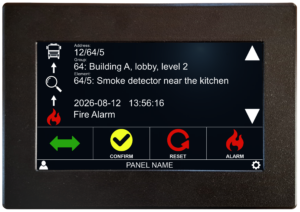
From the server level, displayed messages and permissions are centrally managed, so that dedicated instructions tailored to the operator’s competencies reach the selected location. In the event of a fire alarm, the built-in speaker plays a voice message. After logging in, the operator immediately sees whether it is a preliminary alarm, confirmed, cleared, or if the information has already been transmitted to the fire department. If the device is located in the fire zone, verifying the situation on the screen allows for expediting the call to emergency services through simple confirmation. The placement of detectors, manual call points, and fire groups is clearly presented on graphic overlays, which radically facilitates orientation in the area.
IFTER EQU2 – Intrusion and Access Control Supervision
Other security systems are handled within the IFTER EQU2 platform. Using the SPS panel to manage the alarm system enables control of multiple intrusion zones from different control panels simultaneously. This requires rigorous dual verification using a card and PIN number. Visualization of zones on facility floor plans with dynamic presentation of their status allows for instant situation awareness. The system also integrates digitally with perimeter systems and can utilize video detection from cameras.
Within access control, the screen becomes an interface for presenting advanced information. Extensive functions include:
-
Comprehensive time and attendance tracking, where the employee can select the type of passage (e.g., business trip, private doctor’s visit).
-
Verification of entry and exit history, checking hour reconciliation, and submitting time-off requests.
-
Support for HR processes – the system can display reminder messages about expiring medical examinations with each card presentation.
Thanks to integration, after card authorization the user immediately sees the intrusion security status, enabling immediate arming or disarming of the zone and alarm clearing.
Reservation Management and Safety Training
The system can perform informational tasks beyond standard security. Installing the panel at the room entrance facilitates room reservation management. An authorized person can check the availability schedule, reserve the facility for a selected time, or cancel an existing reservation. The training function, in turn, involves displaying important content to the user, such as safety instructions. The system activates permissions allowing free movement throughout the facility only after the employee confirms familiarization with the material directly on the screen.
The Security Panel System is a powerful solution that significantly streamlines information flow. It enables active inclusion of the remaining workforce in the facility’s security structure and facilitates seamless data distribution to higher-level PSIM-class systems.